The Internet of Things (IoT)
What is IoT?
Internet of Things that has now evolved into a myriad of other titles such as the Internet of everything, Industrial internet of things and Internet of smart things.
Whilst we may believe that IoT is a fairly recent development, the first IoT device was actually connected to the internet back in 1981, where Engineers at Carnegie Mellon University in the USA wanted to know whether a nearby Coke machine had their favourite drink and, more importantly, was it cold? They connected sensors in the machine to the internet and provided a text-based interface so that anyone with the Coke machines internet address could, from anywhere in the world, know the machines contents and temperature (ecoconsultancy.com).
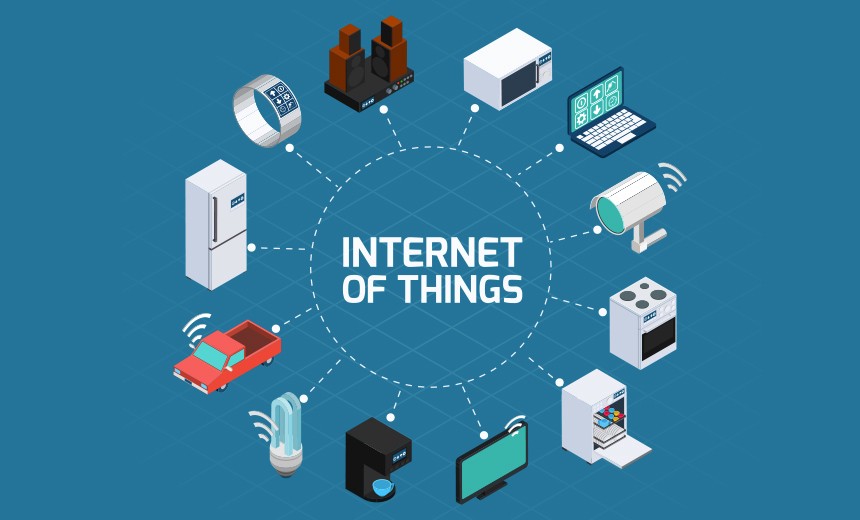
So how do we then define IoT? It is related to the connectivity of physical objects such as vehicles, devices (medical, security, agricultural etc.), appliances, buildings, electronics, and the networks that allow them to interact, collect and exchange data.
Below are some basic terms that should be considered in order to better understand the broader IoT ecosystem:
- The physical layer is the hardware that makes up an IoT device, including sensors and networking gear
- The network layer is responsible for transmitting the data collected by the physical layer to various devices at varying locations
- The application layer includes the protocols and interfaces that devices use to identify and communicate amongst one another
- Remotes enable entities that utilize IoT devices to connect with and control them. These include smartphones, tablets, PCs, smartwatches, connected TVs, and nontraditional remotes.
- A dashboard displays information about the IoT ecosystem to users and enables them to control their IoT ecosystem. It is generally housed on a remote
- Analytics are software systems that analyse the data generated by IoT devices. The analysis can be used for a variety of scenarios, such as predictive maintenance, early warning systems,
- Data storage is where data from the IoT devices is stored
- Networks include the internet communication layer that enables the entity to communicate with their device, and sometimes enables devices to communicate with each other
Sensing or actuating IoT devices can be found on the physical layer at the edge of the network. Data captured from devices is then transported over the network layer to a database for data storage or consumption by services on the application layer. Smart apps carry out forms of analysis and may transmit messages back to devices at the edge of the network to perform specific functions. Data from the device may also form part of a dashboard which allows concerned parties to evaluate metrics over time relating to the device status and its environment.
At a simplistic level, it is possible to purchase widely available, off-the-shelf wifi-enabled switches and/or plugs to (pre)-control a variety of homeware products such as lights, air-conditioning, heating and appliances etc. Driving home on a chilly winter day, you can now be met by a warm environment, with the aroma of freshly percolated coffee permeating your nostrils. Its even possible to control your devices and appliances with low cost, voice-activated IoT hubs now, with a wide range of software apps available to manage these devices from your smartphones. Can you identify with the co-system at work?
- Consumers aren't the only ones using IoT devices though. Cities and businesses are exponentially adopting smart technologies to save time and money. This means Cities can automate, remotely manage, and collect data through things like visitor kiosks, video camera surveillance systems, with transport getting even smarter. IoT is really a means to an end, where it has been rallied that the real value lies in the data moving through the networks.
At a more complex level, imagine the immediate direct and indirect benefits and cost savings when it becomes possible to optimally coordinate the macro-movement of traffic and vehicles through a city, or during a disaster event. Access to real-time data remains crucial to optimally managing resources, but more about data, our next pillar next week.